
布拉格治疗在结肠癌肿瘤模型中抗肿瘤作用的研究
首发时间:2024-04-03
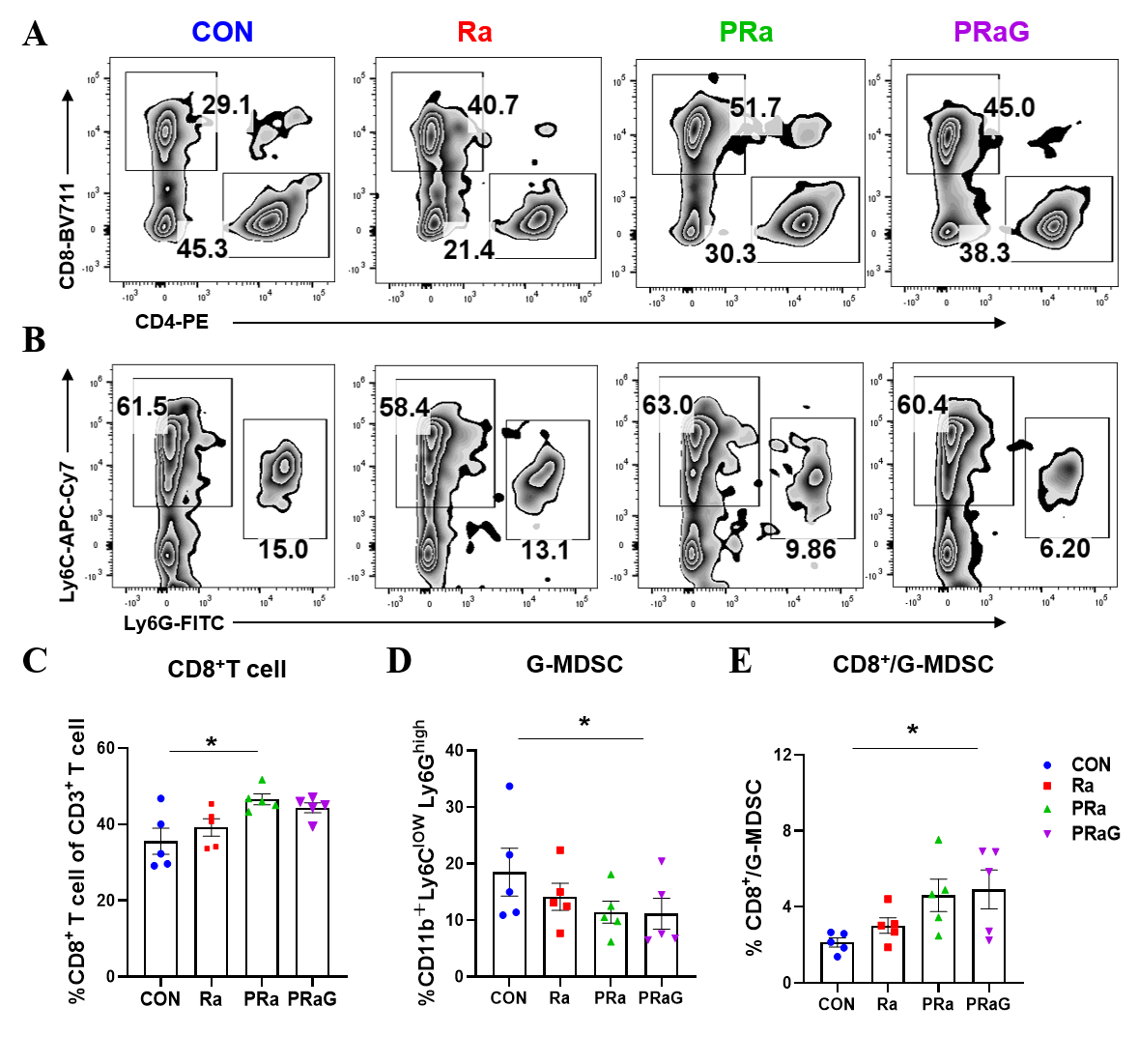
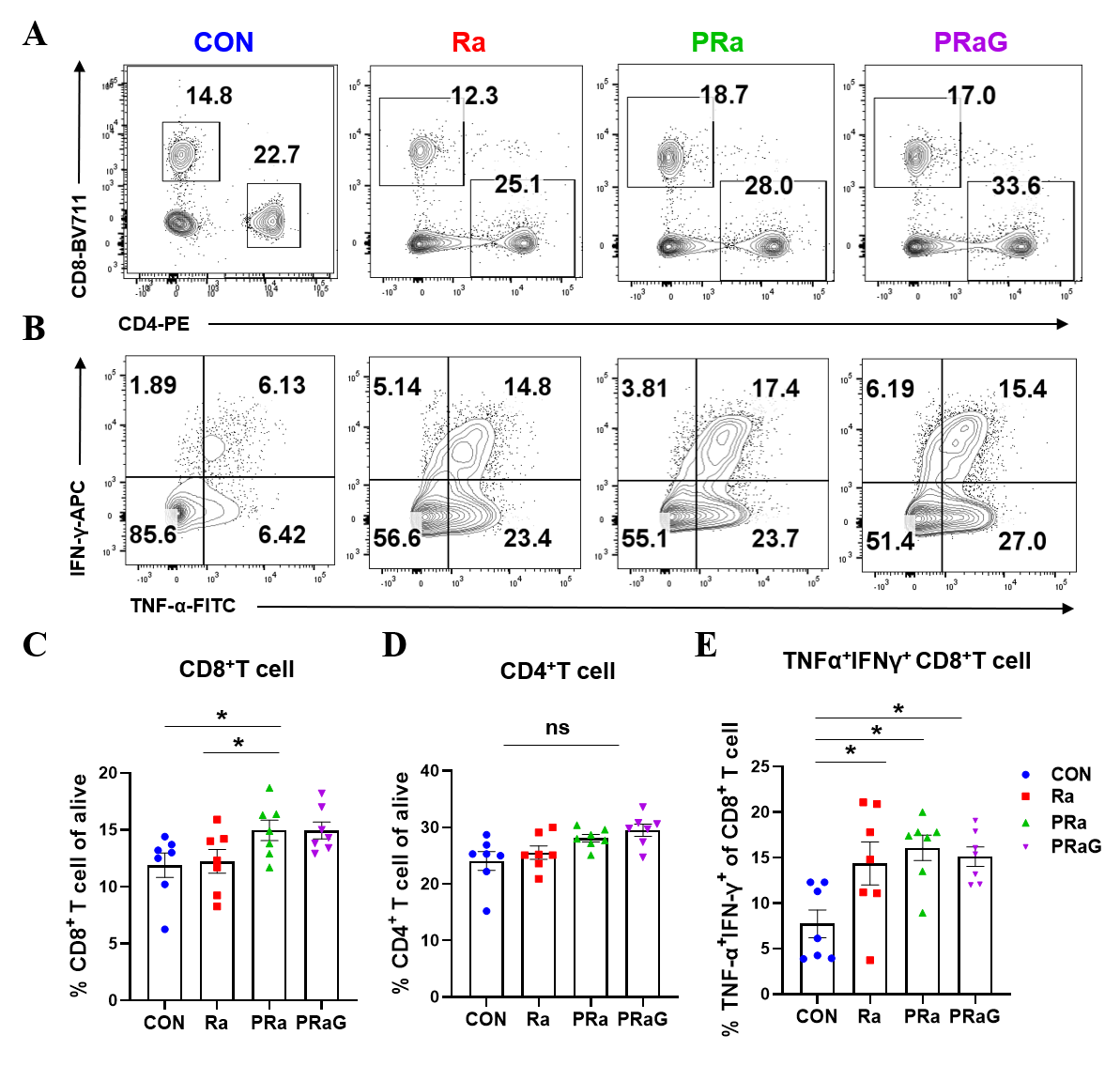
摘要:目的:探究布拉格治疗在小鼠肿瘤模型中的抗肿瘤作用,并探究布拉格治疗在结肠癌肿瘤模型中的抗肿瘤作用及其对肿瘤免疫微环境中免疫细胞的影响。方法:构建小鼠结肠癌MC38双侧皮下瘤模型。实验分组:对照(CON)组,放疗(Ra)组,放疗联合PD-1抑制剂(PRa)组,放疗联合PD-1抑制剂和GM-CSF(PRaG)组。观察并记录小鼠双侧肿瘤生长情况,采用流式细胞术检测各组肿瘤免疫微环境中免疫细胞的比例。结果:相比于CON组,PRaG组照射侧和未照射侧肿瘤体积显著减小。相比于CON组,布拉格治疗显著降低未照射侧肿瘤中G-MDSC的比例,增加肿瘤引流淋巴结中CD8+T细胞的细胞因子TNFα和IFNγ的水平。结论:布拉格治疗具有显著的抗肿瘤作用。布拉格治疗可以通过降低未照射侧肿瘤中G-MDSC细胞比例,增加肿瘤引流淋巴结中CD8+T细胞分泌的细胞因子的水平,诱导全身的抗肿瘤免疫应答。
关键词: 布拉格治疗 放射治疗 GM-CSF?????
For information in English, please click here
Study on the anti-tumor effect of PRaG therapy in colon cancer tumor model
Abstract: Objective: To explore the anti-tumor effect of PRaG therapy in mouse tumor models, and to explore the anti-tumor effect of PRaG therapy in colon cancer tumor models and its effect on the proportion of immune cell populations in the tumor immune microenvironment. Methods: A mouse colon cancer MC38 bilateral subcutaneous tumor model was constructed. Experimental groups:control (CON) group, radiotherapy (Ra) group, radiotherapy combined with PD-1 inhibitor (PRa) group, radiotherapy combined with PD-1 inhibitor and GM-CSF (PRaG) group. The growth of bilateral tumors in mice was observed, and flow cytometry was used to detect the proportions of different immune cells in the tumor immune microenvironment in each group. Conclusion: PRaG therapy has significant anti-tumor effects. PRaG therapy can induce systemic anti-tumor immune responses by reducing the proportion of G-MDSC cells in the tumor on the unirradiated side and increasing the levels of cytokines secreted by CD8+T cells in the tumor-draining lymph nodes.10 Points, Times New Roman)
Keywords: PRaG therapy Radiotherapy GM-CSF
基金:
论文图表:

引用


No.****
动态公开评议
共计0人参与
勘误表
布拉格治疗在结肠癌肿瘤模型中抗肿瘤作用的研究
中国科技论文在线 版权所有
网站地图|
在线首页|
在线简介|
服务条款|
联系我们

京公网安备 11040202430024号 京ICP备15006316号-2| 网络出版服务许可证 (总)网出证(京)字第083号 | 文保网安备案号:1101080066
 提示


 .txt
 .ris
 .doc
评论
全部评论